Case Studies
Volta: By Lemoignan reimagines the barbershop
April 17, 2026
Design studio By Lemoignan took on an ambitious project for Salon Volta in Laval
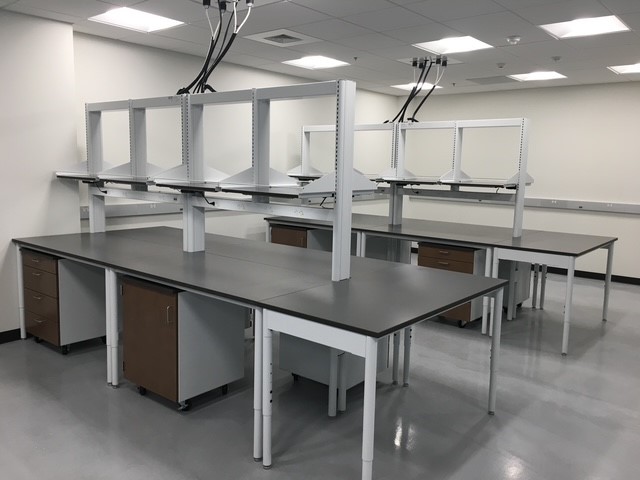
In research environments where flexibility, durability and long-term performance are critical, surface selection plays an important role in supporting day-to-day scientific work. At the Duke Chesterfield Lab Building in Durham, North Carolina, designers and facility leaders selected Trespa® TopLab® Plus Slate Grey Core surfaces to help create a multi-tenant laboratory environment capable of serving a wide range of research disciplines and users.
The 284,000 square foot facility houses collaborative laboratory and innovation spaces for organizations including the Duke Quantum Center, the Pratt School of Engineering Bioengineering Research Institute, Duke Proteomics and Metabolomics Shared Resource Labs and other research-focused tenants. Designed by LAS (Lord Aeck Sargent), the project brought together multiple stakeholders with differing operational needs, priorities and workflows under one roof.
The Chesterfield Lab Building also marked an important milestone as one of the first Trespa® TopLab® Plus Grey Core project completed in the United States.
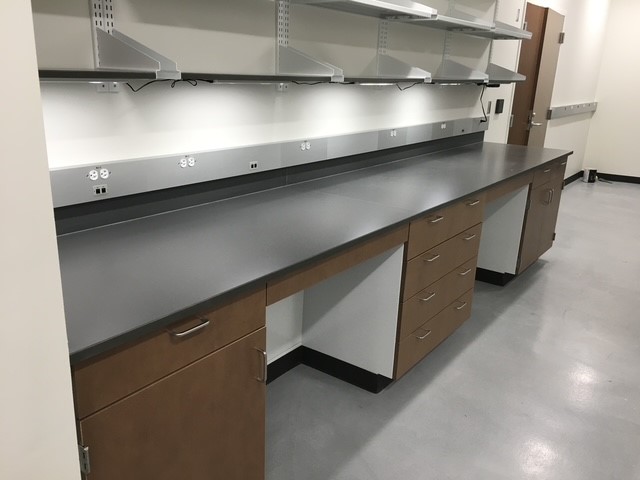
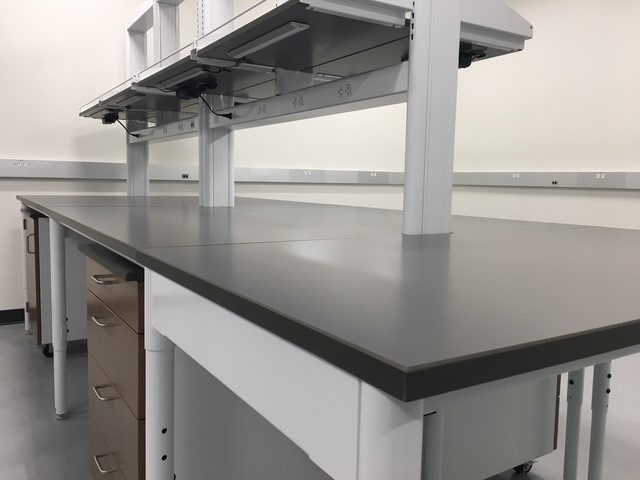
The decision reflected a broader shift toward phenolic resin surfaces for modern laboratory environments. Compared to traditional epoxy resin tops, phenolic resin surfaces offer advantages including lighter weight, fabrication flexibility, impact resistance and simplified installation while also delivering superior chemical resistance and long-term durability for demanding research settings. Trespa® TopLab® surfaces are engineered with Electron Beam Curing (EBC) technology to create a closed, hygienic and easy-to-clean surface designed for scientific environments.
Trespa® TopLab® surfaces also are made with industry-leading renewable material composition. And because they are so durable, the panels last a long time, requiring fewer resources and carbon is stored longer. Durability is a sustainability feature!
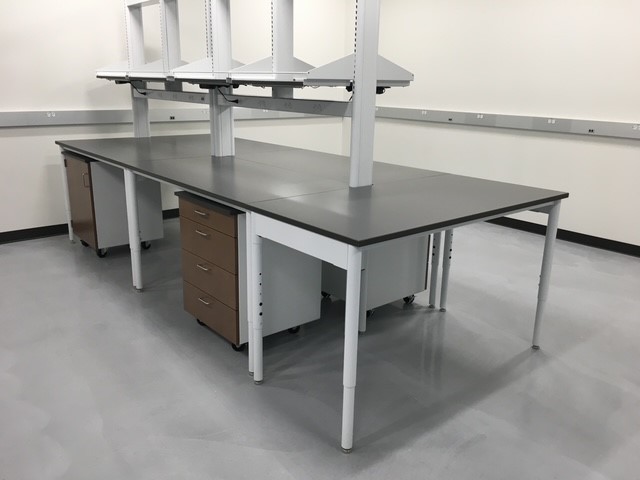
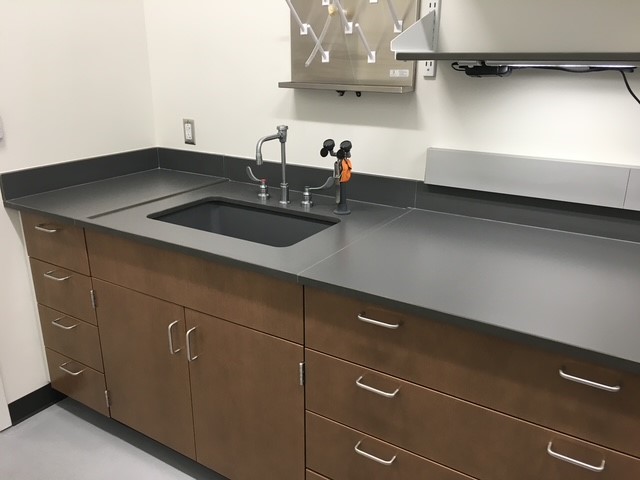
In addition to performance benefits, the surfaces supported the project’s emphasis on adaptability. The multi-floor facility was designed to accommodate evolving research initiatives and collaborative partnerships, making durable and reliable laboratory materials especially important.
Today, the Duke University Chesterfield Lab Building continues to serve as a hub for advanced research and innovation, demonstrating how thoughtfully specified laboratory surfaces can support both scientific performance and modern design expectations in higher education and research environments.
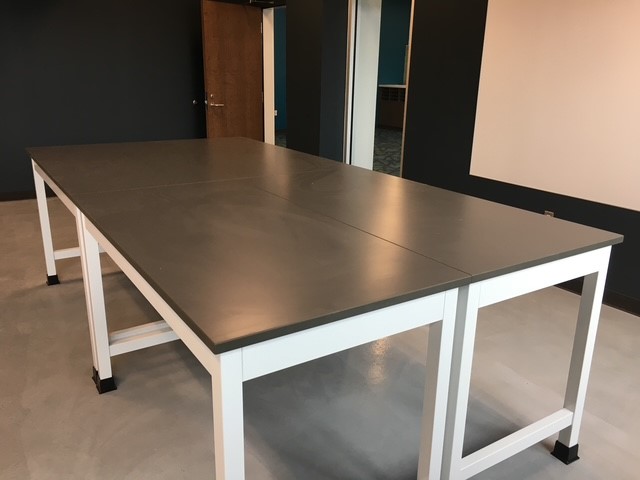
More information on Phenolic vs. Epoxy Resin Laboratory Surfaces: Phenolic vs. Epoxy Resin Countertops: A Performance Comparison for Commercial and Laboratory Spaces | Formica Group
Credits:
Featured Product: Trespa® TopLab® Plus Slate Grey Core
Architect/Designer: LAS (Lord Aeck Sargent – NC)
Photographer: Christian Cole
Case Studies
April 17, 2026
Design studio By Lemoignan took on an ambitious project for Salon Volta in Laval

Case Studies
March 6, 2026
Leclerc Chaussures wanted to revamp both its store layouts and its brand image. See how they used Homapal® Metal Laminate to do so.
Case Studies
March 2, 2026
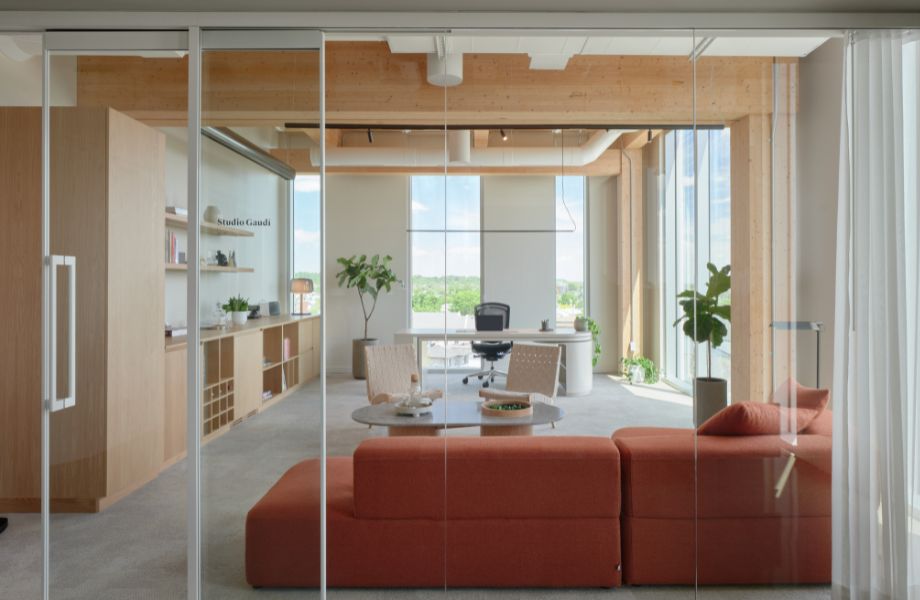
DKA undertook the renovation of its head office with a clear intention: to design a workplace that actively encourages connection, conversation and shared experience, supporting a meaningful return to the office in the post-pandemic era.


Belgium
(Nederlands)
Belgium
(Français)
Canada
(English)
Canada
(Français)
China
(简体中文)
Denmark
(Dansk)
Finland
(English)
Finland
(Suomi)
France
(Français)
German
(Deutsch)
Hong Kong
(English)
Indonesia
(English)
Ireland
(English)
Italy
(Italiano)
Japan
(日本語)
Malaysia
(English)
México
(Español)
Middle East
(العربية)
Netherlands
(Netherlands)
Norway
(Norsk bokmål)
Philippines
(English)
Poland
(Polski)
Singapore
(English)
Spain
(Español)
Sweden
(Svenska)
Taiwan
(繁體中文)
Thailand
(English)
Thailand
(ไทย)
United Kingdom
(English)
United States
(English)
Vietnam
(Tiếng Việt)